|
Online Visual Illusions |
Online Visual Illusions |
Online Visual Illusions |
Online Visual Illusions |








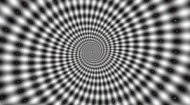
Here is a collection of the best fifty visual illusions of all time captured for you in one neat little package.
More >
|
|

|
Training the mind to analyse illusions sharpens observation, encourages scepticism, and improves pattern recognition. It teaches the importance of slowing down, examining assumptions, and considering alternative explanations. By learning how the mind can be deceived, detectives become better equipped to spot inconsistencies, distinguish signal from noise, and reconstruct events accurately. In both fields, insight emerges not from what is immediately seen, but from understanding how perception itself can distort reality. Studying visual illusions also strengthens a detective’s capacity for empathy and psychological insight. Illusions reveal that different observers can see the same scene in radically different ways, depending on attention, stress, or expectation. This mirrors real investigations, where witnesses may offer conflicting yet sincere accounts of events. Recognising the limits of perception helps investigators avoid prematurely dismissing testimony and instead evaluate how context shaped what was seen or remembered. Illusions further encourage creative thinking: solving them often requires reframing the problem or shifting perspective, a skill essential when conventional lines of inquiry fail. By accepting that perception is flexible rather than fixed, detectives learn to remain open-minded and adaptable. Ultimately, the study of visual illusions reinforces the principle that truth is rarely obvious at first glance and that careful, reflective analysis is essential for uncovering deeper realities. |